
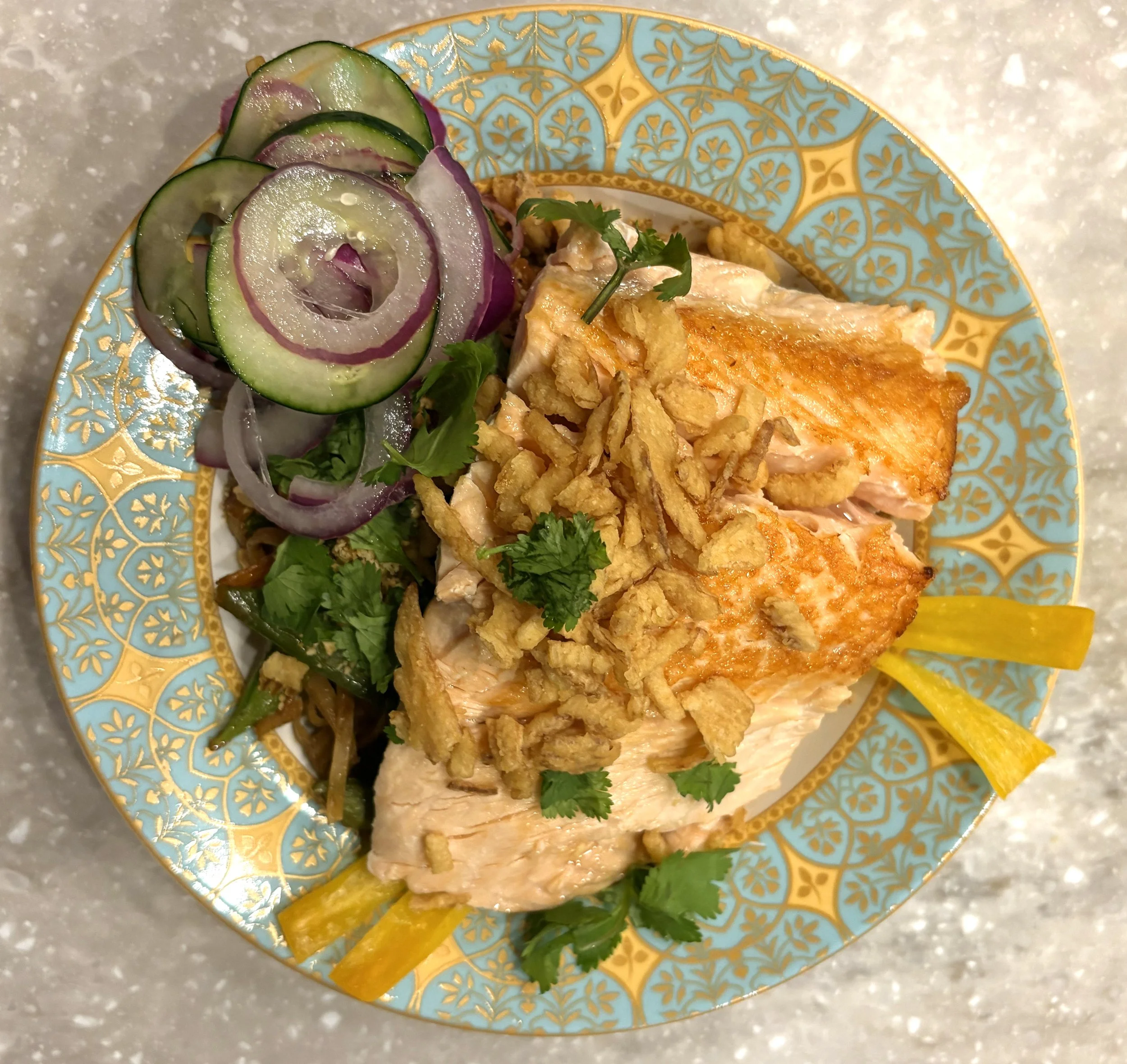
CITRUS COAST — Seared Salmon & Lime Noodles
This dish came out of constraint cooking done right — one pan, one burner, and the discipline to build flavor instead of adding it. The sauce isn’t a separate component; it’s built directly from the salmon’s pan fond, layered with peanut, heat, and lime until it disappears into the noodles.
It eats rich but not heavy, bright but not sharp. The salmon stays in large, intact slabs so it feels like a centerpiece, not a topping. Vegetables are folded in late to keep freshness and snap.
This is the kind of meal that feels restaurant-level, but it’s engineered for a rolling kitchen.

The Plate
Seared salmon. Peanut-lime noodles. Crisp green vegetables.
A rich, balanced sauce built from the pan — bright, savory, and integrated, not dominant.

Ingredient
For the Salmon & Noodles
• 2 salmon fillets (thick cut preferred)
• Kosher salt
• Neutral oil
• 6–8 oz noodles (rice or wheat)
• 1–2 cups snap peas, snow peas, or green beans
• Optional: scallions or shallots
⸻
For the Sauce
• 2–3 tbsp peanut butter (natural)
• 1 tbsp soy sauce or tamari
• 1–2 tsp coconut aminos (optional — for a softer, slightly sweeter balance)
• 1 tsp fish sauce
• 1–2 tsp brown sugar or palm sugar (see note below if using coconut aminos)
• 1–2 tsp chili paste (sambal or similar)
• 2 cloves garlic, minced
• 1–2 tsp fresh ginger, minced
• Zest of 1 lime
• Pulp + juice of ½–1 lime (to taste)
• Splash of water or coconut milk (to loosen)
⸻
OPTIONAL SIDES (AS PLATED)
• Cucumber salad with rice vinegar
• Light cabbage slaw with sesame
• Simple herb salad (cilantro, mint, lime)
• Roasted or charred broccoli
Method
1. Cook the Noodles
Cook according to package instructions.
Drain, toss lightly with oil, and set aside.
⸻
2. Sear the Salmon
Heat pan over medium-high until hot.
Add oil and season salmon.
Sear undisturbed until a deep crust forms.
Flip briefly, then remove.
Do not wipe the pan — the fond is the base of the sauce.
⸻
3. Build the Sauce
Lower heat.
Add garlic and ginger. Cook briefly until fragrant.
Add chili paste and toast lightly.
Stir in peanut butter and let it melt into the pan.
Add soy sauce, fish sauce, and coconut aminos (if using).
Add a smaller initial amount of sugar, then taste before adding more.
Add lime zest and a small amount of lime pulp/juice.
Loosen with water or coconut milk until silky.
Taste and adjust:
• More lime for brightness
• More soy/fish sauce for structure
• More peanut or liquid to soften
• Only add remaining sugar if needed
⸻
4. Combine
Add noodles and toss to coat fully.
Fold in vegetables at the end so they stay crisp.
Heat just until everything is integrated.
⸻
5. Finish & Plate
Place noodles on plate.
Lay salmon in whole slabs on top or alongside.
Spoon a small amount of sauce over the salmon.
Optional garnish: herbs, crushed peanuts, lime wedge.


Wine Pairing
Off-dry Riesling
Gewürztraminer
Chenin Blanc (slightly off-dry)
Light Pinot Noir (if going red)

Rolling Kitchen Note
Build the sauce in the same pan every time — that’s where the depth comes from. If you lose the fond, you lose half the dish.
Peanut sauces go heavy fast. Control thickness with water first, not more oil. You’re aiming for coating, not paste.
Lime should not hit first. If you taste lime immediately, you’ve gone too far — soften it with fat or a touch more sweetness.
If using coconut aminos, treat it as a softener, not a replacement for soy. It adds mild sweetness and rounds edges, so start with less sugar and build up. The goal is balance — not a sweet sauce.
Vegetables go in last. In a small RV kitchen, texture is what keeps the dish from feeling flat.
If cooking outside on induction or wind-exposed heat, expect to adjust liquid more than usual — evaporation happens fast.